On this page
- Does 69.5% of UK Google search really end without a click?
- AI answers are part of the change—not the whole explanation
- Not every search deserves the same KPI
- A zero-click playbook for UK SMEs
- How to measure search when traffic is no longer enough
- A focused 30-day action plan
- Common zero-click search questions
Zero-click search does not mean search marketing has stopped working. It means a search session ends without a detectable click to a result. The user may have read an answer, checked opening hours, refined the query, moved to another Google surface or simply given up. Those outcomes have very different value to a UK small business, yet a headline percentage groups them together.
The practical response is not to chase every lost visit. It is to decide which searches should create awareness, which should produce an action on the results page and which genuinely need a visit to complete a decision. Then measure each type accordingly.
Does 69.5% of UK Google search really end without a click?
A June 2026 SparkToro analysis of Similarweb's desktop and mobile browser panel estimated that 69.5% of UK Google searches from January to April 2026 ended without a click. The UK had the highest zero-click rate among the six countries in that analysis. It also recorded an estimated 232 clicks to the open web per 1,000 searches.
That is useful directional evidence, but it is not an official Google statistic or a universal conversion rate. The study excludes searches inside Google's mobile search app, relies on a third-party clickstream panel and cannot tell an individual business why a person did not click. Its 'zero-click' total combines sessions that ended with those followed by another search.
Google presents a different view. It says total organic click volume to websites has remained relatively stable year over year and that the clicks it sends are becoming more engaged. Google has not published enough underlying data in that statement for an independent like-for-like comparison. The responsible conclusion is therefore narrower: search behaviour is changing, effects differ by site and query, and each business should use its own data before declaring a traffic crisis.
AI answers are part of the change—not the whole explanation
AI Overviews can satisfy informational searches before a visit, but search results were answering questions long before generative AI. Featured snippets, calculators, weather, sports scores, maps, product panels and knowledge panels all create no-click sessions. Brand familiarity, poor result relevance and follow-up searches also affect the figure.
Independent US evidence suggests AI summaries can reduce click-through on affected searches. Pew Research Center studied browsing data from 900 US adults in March 2025: users clicked a traditional result on 8% of visits when an AI summary appeared, compared with 15% when it did not. Only 1% clicked a source inside the summary. This was a US study from a specific period, so it should not be presented as a UK rate, but it helps explain why purely informational traffic is vulnerable.
Not every search deserves the same KPI
Classify important queries by the job the searcher is trying to complete. This prevents a useful result-page action from being reported as a traffic failure and stops the business investing equally in searches with very different commercial potential.
1. Quick-answer searches
Examples include definitions, opening hours, simple calculations and short factual questions. Many users do not need a website visit. Treat visibility and factual accuracy as the primary goals, then provide a deeper resource for the smaller group that needs context.
2. Local-action searches
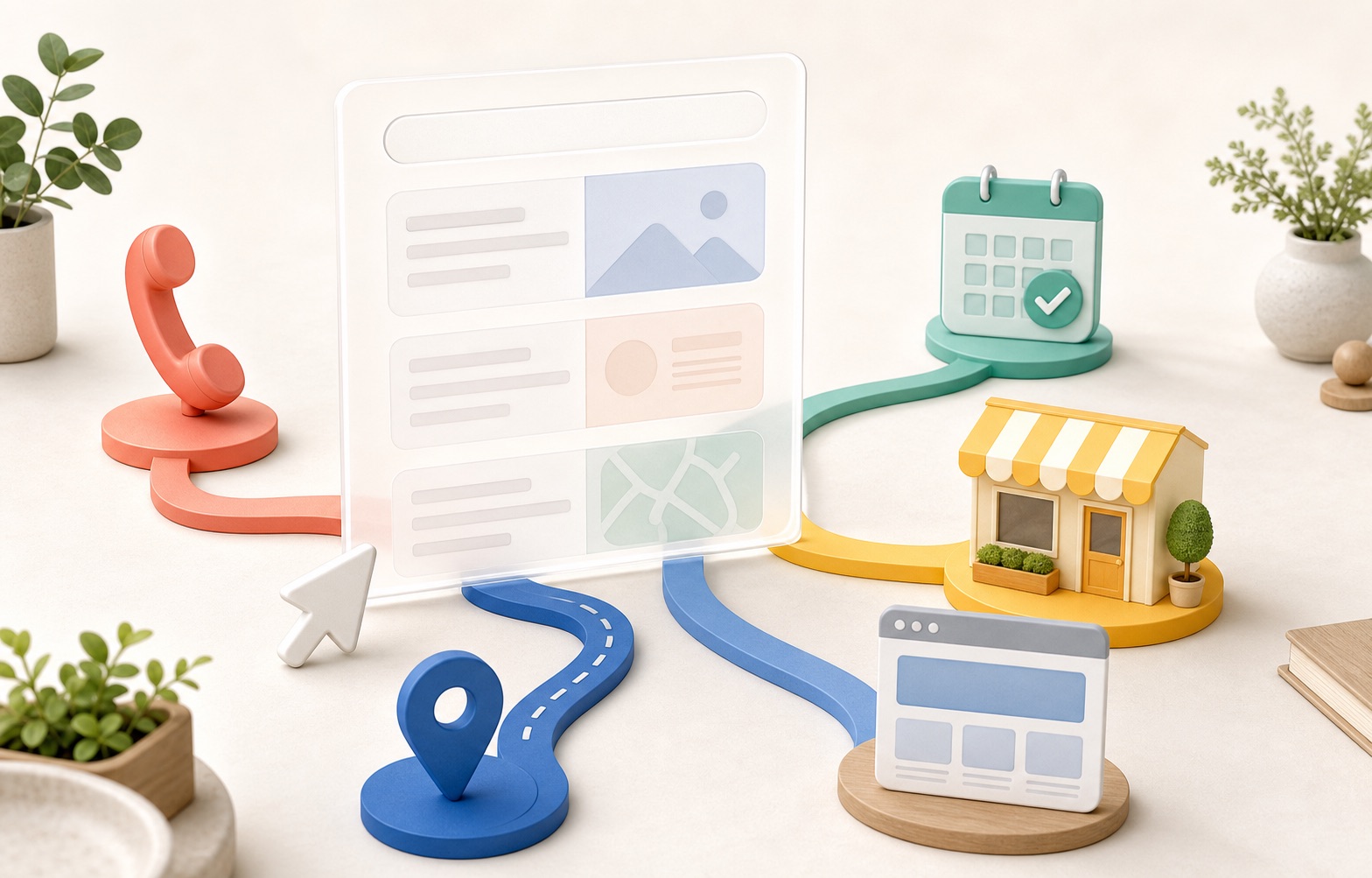
A person searching for a nearby café, emergency plumber or clinic may call, request directions, view a menu or book from a Business Profile. The website session can be zero while the commercial outcome is real. Track those actions separately from organic website clicks.
3. Evaluation searches
Comparisons, prices, case studies, suitability questions and implementation details usually require more depth than a short answer can provide. These are strong candidates for a visit because the user is reducing risk before a decision. Give the result a clear reason to click: original evidence, a useful tool, transparent detail or a relevant example.
4. Transactional and branded searches
A search for a named business, product, booking or quote carries explicit intent. Protect these journeys from outdated listings, confusing titles, slow mobile pages and unnecessary steps. A smaller number of high-intent visits can be more valuable than a large volume of generic informational traffic.
A zero-click playbook for UK SMEs
Make your brand answer consistent
Check how the business is represented across its website, Google Business Profile and genuine industry or local profiles. Names, services, address, contact details, opening hours, service areas and availability should agree. Result-page visibility is harmful when the answer is wrong.
- Use one consistent trading name and a working primary contact route.
- Keep holiday hours, menus, services, photographs and booking links current.
- Answer recurring customer questions in plain language on the relevant service page.
- Correct stale third-party profiles that customers genuinely use; do not mass-create low-quality listings.
Treat result-page actions as conversions
Google Business Profile can report website clicks, calls, directions, messages, bookings, menus and other eligible interactions. Google also allows profiles to be linked with Analytics so those metrics can be reviewed alongside website and app data. Configure the contact methods that matter, then make somebody responsible for responding to them.
A call-button tap is still not confirmed revenue. Where proportionate and lawful, connect enquiries to the CRM or booking record and record their outcome. The aim is to understand which search actions become qualified leads, attended appointments or sales—not to replace one vanity metric with another.
Publish the part that cannot fit in a summary
Do not hide the basic answer to force a click; that creates a poor result and a poor page. Answer the question directly, then add decision-making value: your method, original photographs, pricing logic, limitations, delivery area, calculator, demonstration, case study or clearly explained next step.
- A builder can show an actual project sequence, constraints and finish—not another generic list of renovation tips.
- A software firm can provide an interactive estimate, documented integration example or reproducible benchmark.
- A professional service can explain scope, evidence requirements, exclusions and what happens after an enquiry.
- A retailer can surface live availability, variants, delivery terms and first-hand product media.
Build demand beyond the search results
Search often captures demand created somewhere else. Customer recommendations, partnerships, events, email, useful social content, trade communities and public expertise can make people search for the business by name. Choose the channels the audience actually uses and make the content valuable on that platform rather than treating every post as a teaser link.
Make the high-intent visit count
When someone does click, match the promise of the search result immediately. A service page should identify the service, audience, area, evidence and next action without a scavenger hunt. Test forms, phone links and booking journeys on mobile, and remove fields that the business does not need at the first step.
How to measure search when traffic is no longer enough
Use a small scorecard that separates exposure, result-page action, website behaviour and revenue. Compare trends over a sensible period and annotate site changes, seasonality and campaigns. A single week of declining clicks is not a strategy diagnosis.
- 1Visibility: relevant Search Console impressions, split between branded and non-branded queries where the filter is available.
- 2Website response: clicks and click-through rate by query and landing page, with device and UK filters where useful.
- 3Result-page actions: Business Profile calls, directions, bookings, messages, menus and website clicks.
- 4Demand signals: growth in branded search, direct enquiries, returning visitors and mentions by known referral sources.
- 5Commercial outcomes: qualified leads, booked appointments, sales, revenue and cost per acquired customer.
- 6Quality: conversion rate and lead quality by landing page rather than aggregate organic sessions alone.
A focused 30-day action plan
- 1Export 90 days of UK Search Console queries and landing pages, then identify material impression, click and CTR changes.
- 2Label the most important queries as quick-answer, local action, evaluation, transactional or branded.
- 3Audit the live result pages for those searches on an appropriate device and location; record which features compete for attention.
- 4Correct inaccurate Business Profile details and test every call, direction, message and booking path you offer.
- 5Improve one evaluation page with original evidence and one genuinely useful decision aid.
- 6Simplify the conversion journey on the highest-intent mobile landing page.
- 7Create a monthly scorecard connecting search visibility and profile actions to qualified enquiries and revenue.
Common zero-click search questions
Is SEO still worth it for a UK small business?
Yes, when it targets the searches and outcomes that matter. Local, branded, evaluation and transactional searches can still produce calls, directions, bookings and valuable visits. The business case should be based on those outcomes rather than traffic growth alone.
Should we stop answering simple questions?
No. A clear answer can build recognition and trust even when it does not earn a visit. Prioritise questions that support your customers and commercial expertise, and connect them naturally to deeper decisions without withholding the answer.
Can we calculate our own zero-click rate?
Not precisely from Search Console and Analytics alone. They show impressions and visits to your properties, not every action a searcher took or why a session ended. Use query-level CTR, Business Profile actions and downstream outcomes as practical proxies rather than presenting an invented site-wide zero-click percentage.
Does a lower click-through rate always mean a page is worse?
No. Search layout, intent, device, ranking and result features all affect CTR. Investigate relevant query and conversion trends together. A page can receive fewer visits yet produce more qualified enquiries; it can also gain impressions for broad queries that were never likely to convert.
“Do not optimise for the click in isolation. Optimise for the next useful action a customer should take—and make that action measurable.”